Public Agenda NewsPaperPublic Agenda NewsPaper
  • General News
  • Politics
  • Business
  • Health
  • Development Agenda
  • World News
  • Features & Opinions
  • Election watch
  • Editorial
Font ResizerAa
Public Agenda NewsPaperPublic Agenda NewsPaper
Font ResizerAa
  • General News
  • Politics
  • Business
  • Health
  • Development Agenda
  • World News
  • Features & Opinions
  • Election watch
  • Editorial
Search
  • General News
  • Politics
  • Business
  • Health
  • Development Agenda
  • World News
  • Features & Opinions
  • Election watch
  • Editorial
Follow US
Breaking NewsBusinesstop stories

Ghanaian civil society calls on private lenders to cancel external debt

Suleman
Last updated: January 23, 2023 10:31 am
Suleman
Share
4 Min Read
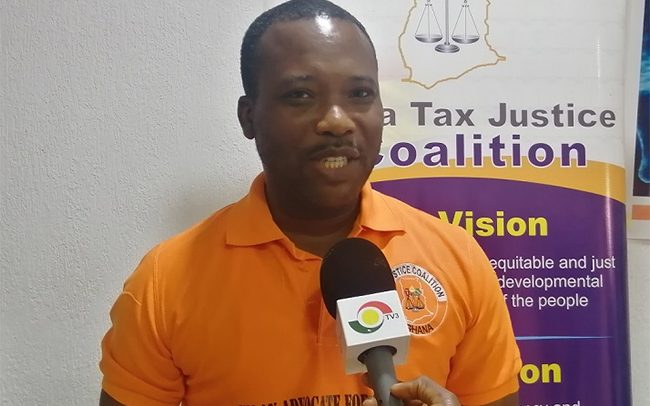
Bernard Anaba, Tax Justice Coalition Ghana
SHARE

A group of Ghanaian civil society organisations is calling on international lenders to cancel enough of Ghana’s debt to make it sustainable. They call on Ghana to be supported by the G20, and UK in particular, to stay in default on all external creditors who refuse to accept the scale of debt cancellation needed.

In December Ghana announced it is suspending debt payments to external private lenders and has applied for the G20 Common Framework for Debt Treatments. Ghana is expected to miss its first payment on a foreign currency bond on 18 January, a $41 million interest payment on a $1 billion bond.[

Ghana is the latest country that has defaulted on debt and sought a debt restructuring since the Covid pandemic began, and food and energy prices shot up in 2022.

Signatories of the statement include the Integrated Social Development Centre (ISODEC), Tax Justice Coalition Ghana, Ghana Integrity Initiative, Caritas Ghana, and ActionAid Ghana. It is also supported by the African Forum and Network on Debt and Development (Afrodad), Debt Justice, Eurodad, Christian Aid, Oxfam, Public Services International and Third World Network.

 In the statement the signatories: “welcome Ghana’s suspension of most external debt payments until creditors agree to cancel enough debt to make it sustainable.”

They point out that the high-interest rates private lenders charge mean that they should now be willing to accept losses on their risky bets.
“Ghana’s lenders, particularly private lenders, lent at high-interest rates because of the supposed risk of lending to Ghana. The interest rate on Ghana’s Eurobonds is between 7% and 11%. That risk has materialised with the global Covid pandemic, rising food and energy prices, and increasing global interest rates. Given that they lent seeking high returns, it is only right that following these economic shocks, private lenders willingly accept losses and swiftly agree to significant debt cancellation for Ghana.”

More Read

Petrol, diesel prices set to fall from Oct. 16 as LPG faces 18.5% hike
IMF raises Ghana’s 2026 growth forecast to 5.7%, exceeding government’s target
CSOs, Fisheries Stakeholders Demand Revocation of Offshore Gold Licences
ActionAid ‘deeply alarmed’ by US government’s sanctions on the International Criminal Court
Mental Health Alliance Calls for 5% Employment Quota for Persons with Disabilities

The organisations call on the G20, and the UK in particular, to support Ghana in the debt negotiations:
“The G20 can help by making clear that Ghana will be politically and financially supported to remain in default on any creditor which does not accept the necessary debt restructuring. Furthermore, Ghana’s foreign currency bonds are governed by English law. The UK parliament could update their Debt Relief (Developing Countries) Act to specify that no creditor can sue under English law for more than they would have got if they had taken part in the Common Framework debt restructuring.”

The statement also calls for increased transparency, including bondholders releasing information on how much debt they own and the price they paid for it. Ghana’s Eurobonds are trading at 35-40 cents on the dollar. The signatories point out that tackling the debt crisis in many African countries requires “a reformed international financial architecture through the United Nations, which delivers sustainable development finance to all countries.”

Source: Publicagendagh.com
Share This Article
Facebook Whatsapp Whatsapp Email Copy Link Print

Recent Posts

  • Petrol, diesel prices set to fall from Oct. 16 as LPG faces 18.5% hike
  • IMF raises Ghana’s 2026 growth forecast to 5.7%, exceeding government’s target
  • CSOs, Fisheries Stakeholders Demand Revocation of Offshore Gold Licences
  • ActionAid ‘deeply alarmed’ by US government’s sanctions on the International Criminal Court
  • Mental Health Alliance Calls for 5% Employment Quota for Persons with Disabilities
  • A call for GoldBod-Type Financing Model for NAFCO
  • ISODEC Forum Calls for New Thinking on Ghana’s Economic Management
  • 24-hour economy markets’ renamed District Economy Markets – Ayariga
  • Ghana’s tuna industry collapsing under high operating costs – NAFAG
  • Cocaine seizures: Parliament reconvenes today for emergency sitting
  • MEHSOG demands update on alleged sexual assault of 14-year-old Bolga Girls student
  • Food prices in Ghana remain largely stable – AGRA report
  • Mahama convenes high-level meeting to strengthen border security and narcotics control
  • Minority demands action on unemployment among graduates with disabilities
  • Mental Health Organisations Seek Improved Social Protection for Vulnerable Women and Girls
  • GOLDBOD!
  • Mental Health Groups Demand Criminal Probe into Alleged Sexual Assault of 14-Year-Old at Bolga Girls SHS
  • Mental Health Authority to shut Kumasi spiritual centre housing 2,000 mentally ill persons

You Might Also Like

Breaking NewsBusinesstop stories

A call for GoldBod-Type Financing Model for NAFCO

October 8, 2026
Breaking NewsBusiness

ISODEC Forum Calls for New Thinking on Ghana’s Economic Management

October 8, 2026
Breaking NewsGeneral Newstop stories

24-hour economy markets’ renamed District Economy Markets – Ayariga

October 5, 2026
Breaking NewsGeneral Newstop stories

Ghana’s tuna industry collapsing under high operating costs – NAFAG

October 1, 2026

About Us

Public Agenda is fou­nded and owned by Pu­blic Agenda Communic­ations.

Public Agenda was founded as a public interest Me­dia entity. Its Visi­on is to contribute to building a well-i­nformed society where accurate informati­on dissemination is the cornerstone of a democratic, just and equitable society.

Its mission is to inform, guide and bui­ld responsible citiz­enship and accountab­le decision making and strive for excell­ence in the media in­dustry. Public Agenda Communications is managed by a Board of Directors.

  • Contact us
  • Advertise with us
Welcome Back!

Sign in to your account

Username or Email Address
Password

Lost your password?