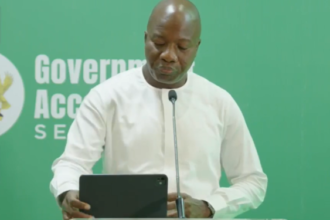



Mr Micheal Zewu Glover, President of the Volta Regional Branch of the Ghana Bar Association (GBA), said community service held the key to the decongestion of the nation’s prisons and correction centres.
“Community service when entrenched in the law, will serve as a means of satisfying community’s revulsion towards popular crime, and help to significantly reduce prisoner populations,” he said.
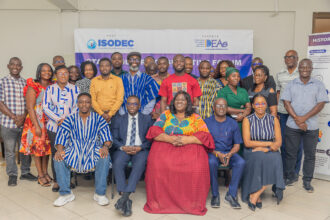
Mr Glover was addressing a regional stakeholders forum on the Non-Custodian Sentencing Bill in Ho, organised under the auspices of the Ghana Bar Association, the “Perfector Of Sentiments” (POS) Foundation, and the Ministry of Interior.
More Read

He noted that, “the absence of sentences other than death, imprisonment, detention or fines resulted in severe overcrowding and congestion in the prison facilities”, and charged legal practitioners and Civil Society Organizations to reposition themselves and advocate for non-custodial sentencing.
Mr Glover asked them to work towards the prompt passage of the Non- Custodial Sentencing Bill to stop overcrowding in the prisons and promote the welfare of inmates and their reformation.
He said the need to institutionalize community service in Ghana was long overdue, and that increased awareness on the Bill among stakeholders in criminal justice system and the general public was critical to its passage into law.
The forum forms part of regional engagements aimed at educating stakeholders on the Bill and its goals within the areas of justice sector reforms, and also to draw contributions from stakeholders to improve the Bill and encourage its passage.
Mr Jonathan Osei Owusu, Executive Director of POS Foundation, said stakeholders must help come up with the “most considerable” sentencing policies under the Bill, and ensure that misdemeanours and petty crime flooding the justice system did not clog prison facilities.
The Executive Director said petty offenders got hardened in prisons and would take up a more ruthless life of crime when faced with stigma.
He said Ghana must set the pace for other countries, and appealed for more Presidential amnesties, also as a way of helping keep prison populations low.
Mr Moses Asampoa of the Volta Regional office of the Attorney General’s Department, said prison conditions in the country abused prisoners’ right to dignity, adding that the law must rise above “irrelevance.”
“It’s time we took steps to ensure that we stop dehumanising our fellow humans,” he added.
POS Foundation produced a Non-Custodial Sentencing Draft Bill under the watch of the Chief Justice, who said it must complement existing sentencing provisions within the Criminal and Other Offences Act, 1960 (Act 30).
“The Bill is to be seen as adding other forms of sentencing, such as community service orders, to the existing ones, and accordingly should be presented as Criminal and Other Offences (Procedure) (Additional Forms of Sentencing Amendment) Bill to promote means of reducing the use of imprisonment as a form of punishment for non-serious offences,” Chief Justice Sophia Akuffo earlier told a Multi-Stakeholder Conference on the Draft Bill in Accra.
Non-Custodial Sentence or Alternative Sentence refers to a punishment by a court of law not involving a prison term, and includes community service order, probation order, supervision order (parole), drug testing and treatment order.
POS Foundation is proposing that successful models used in African countries that practise non-custodial sentencing such Kenya, Uganda and Tanzania be considered for implementation.
Source: GNA