
Public Agenda NewsPaperPublic Agenda NewsPaper
  • General News
  • Politics
  • Business
  • Health
  • Development Agenda
  • World News
  • Features & Opinions
  • Election watch
  • Editorial
Font ResizerAa
Public Agenda NewsPaperPublic Agenda NewsPaper
Font ResizerAa
  • General News
  • Politics
  • Business
  • Health
  • Development Agenda
  • World News
  • Features & Opinions
  • Election watch
  • Editorial
Search
  • General News
  • Politics
  • Business
  • Health
  • Development Agenda
  • World News
  • Features & Opinions
  • Election watch
  • Editorial
Follow US
Breaking NewsGeneral News

Promote inclusiveness in governance – Opong-Fosu urges AU

Latifa Carlos
Last updated: February 22, 2019 4:21 pm
Latifa Carlos
Share
4 Min Read
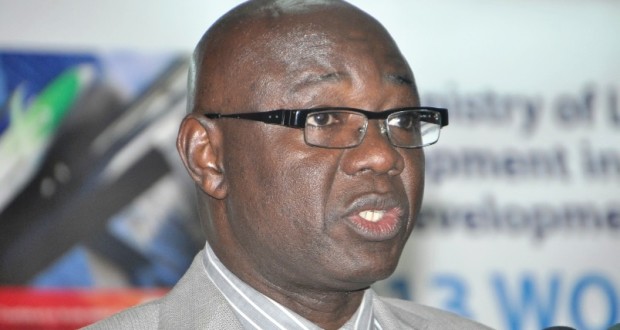
Mr Akwasi Oppong-Fosu
SHARE

A Former Minister of Local Government and Rural Development, Mr Akwasi Oppong-Fosu, has called on the African Union (AU) to promote diversity and inclusiveness in governance and resource distribution in its member countries.

He said in doing so, African countries would be embracing and drawing on the strength and creativity of diverse groups to promote national cohesion, peace and stability.

Mr Opong-Fosu made the call when he delivered a paper on “Crisis Arc of Central Africa and Sahelo-Saharan Regions: Conflicts and Emergent Threat,” at the 10th Africa Security Forum held in Marrrakech, Morocco, on February 9 and 10, 2019.

More Read

Ghana, EU strengthen partnership to address Sahel security challenges
President Mahama links poor WASSCE results to neglect in basic education
Ghana needs strategic plan for critical minerals- Yao Graham
Congo mineral expert urges Ghana to adopt integrated Lithium strategy
Forestry Commission arrests 11 Chinese and 10 Ghanaians in an Anti – “Galamsey” Swoop at Yakombo Forest Reserve

The forum, which was on the theme; “Building the security of the future for Africa,” was hosted by the Moroccan Centre for Strategic Studies in partnership with African Federation for Strategic Studies.

Mr Opong-Fosu noted that the creation of nation-states on the continent by colonial powers did not take into account the diverse cultural identities that existed.

“Thus, the starting point to sustainable peace and security architecture is to promote the concept of unity in diversity as well as inclusiveness in governance and resource distribution,” he emphasised.

Identity politics

Mr Opong-Fosu said Africa had over the years faced governance challenges including identity politics and the patronage and personalisation of political power.

“There has also been the pervasive lack of state capacity to deliver on its mandate, including the security and well-being of citizens, access to basic needs and employment opportunities.

“The sum total is inequality, mistrust, conflict and insecurity. And as you are all aware, security is both critical to the attainment as well as a pre-condition for sustainable development.

Evidence abounds that where high levels of insecurity exists, peaceful co-existence is compromised and socio-economic development takes a downturn,” he told his audience.

Arms proliferation

Touching on arms proliferation, the former minister said the Central Africa and Sahelo-Saharan regions have notoriously been a hub, with extremist groups and transnational criminals taking advantage of the porous borders and limited capacity of the states to perpetrate illegal activities.

“Central Africa and the Sahelo-Saharan region have huge potential for sustainable development.

This is, however, undermined by governance challenges, conflict and insecurity with spillover effects portending serious threats to other neighbouring regions in Africa, Europe and Asia,” he said.

In that connection, he proposed three key approaches to securing sustainable security and stability in the regions.

They included the promotion of diversity and inclusion in governance, coordinated approach to a comprehensive security strategy and enhanced role for key players in North Africa.

Coordinated efforts

While appreciating efforts by the AU, the European Union (EU), the United Nations (UN) and other international organisations at addressing the security challenges in the Central Africa and Sahelo-Saharan regions, there appeared to be competition instead of cooperation among the actors.

He stressed the need for a coordinated approach as against competing policies, programmes and strategies in tackling the challenge.

Besides, he said the strategic roles by key players such as Morocco and Algeria towards influencing security and stability in Central Africa and the Sahelo-Saharan regions needed to be recognised as part of international efforts at fostering security and stability.


Source: Graphic.com.gh

Share This Article
Facebook Whatsapp Whatsapp Email Copy Link Print

Latest News

Ghana’s inflation drops to 6.3% in November, lowest since 2021 rebasing
December 3, 2025
Ghana Launches First National Infrastructure Transparency Index
December 2, 2025
Presidency forwards petitions for removal of EC Chair, Deputies & Special Prosecutor to Chief Justice
December 2, 2025
Reflecting on the UN Tax Negotiations: A New Chapter for Ghana and Africa in Global Tax Justice
December 2, 2025
Ghana can unlock major domestic resources through Structured Philanthropy
November 28, 2025
Global funding cuts devastating HIV prevention programmes says UNAIDS
November 27, 2025
Majority: 10% Lithium royalty deal violated mining law
November 25, 2025

You Might Also Like

Breaking NewsGeneral Newstop stories

Supreme Court directs Wesley Girls SHS to respond to Muslim Rights allegations

November 25, 2025
Breaking NewsDevelopment AgendaGeneral Newstop stories

Mahama extends IGP Yohuno’s tenure by two years

November 25, 2025
Breaking NewsGeneral Newstop stories

Forestry Commission Debunks Interdiction Claims, Clarifies GHS623,000 Revenue Issue

November 20, 2025
Breaking NewsBusinesstop stories

PIAC elects Richard Ellimah as new chair

November 18, 2025

About Us

Public Agenda is fou­nded and owned by Pu­blic Agenda Communic­ations.

Public Agenda was founded as a public interest Me­dia entity. Its Visi­on is to contribute to building a well-i­nformed society where accurate informati­on dissemination is the cornerstone of a democratic, just and equitable society.

Its mission is to inform, guide and bui­ld responsible citiz­enship and accountab­le decision making and strive for excell­ence in the media in­dustry. Public Agenda Communications is managed by a Board of Directors.

Welcome Back!

Sign in to your account

Username or Email Address
Password

Lost your password?