
Public Agenda NewsPaperPublic Agenda NewsPaper
  • General News
  • Politics
  • Business
  • Health
  • Development Agenda
  • World News
  • Features & Opinions
  • Election watch
  • Editorial
Font ResizerAa
Public Agenda NewsPaperPublic Agenda NewsPaper
Font ResizerAa
  • General News
  • Politics
  • Business
  • Health
  • Development Agenda
  • World News
  • Features & Opinions
  • Election watch
  • Editorial
Search
  • General News
  • Politics
  • Business
  • Health
  • Development Agenda
  • World News
  • Features & Opinions
  • Election watch
  • Editorial
Follow US
Breaking NewsDevelopment Agenda

The people who drown human beings to catch a fish

Latifa Carlos
Last updated: May 7, 2019 3:18 pm
Latifa Carlos
Share
5 Min Read
SHARE

Fishermen along the Volta Lake are sacrificing the living in a warped but desperate desire to make a living, JoyNews has found out.

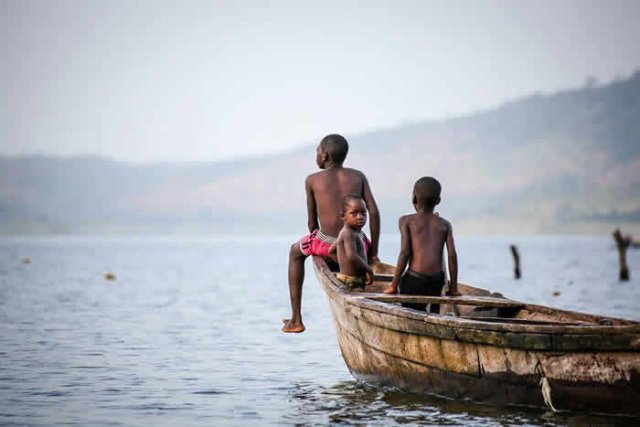
In the communities that hug the shoreline of the Volta Lake, children some as young as six are sunk across 8,502sq km of water which can run as deep as 245 feet – deeper than Ghana’s tallest building – The Villaggio II – 195ft.

These children are trained to obey but untrained to swim. There is a belief among the fishermen and traffickers that dead bodies attract schools of fishes, fetching a handsome profit for these men of the lake.

More Read
2027 Budget: Inside Mahama’s US$10bn New Economy programme
Gov’t won’t borrow to finance New Economy Programme – Ato Forson
ACA Participates in 15th VINACAS Golden Cashew Rendezvous in Vietnam
Farmers demand compensation over Newmont Ahafo North land acquisition
African Philanthropy Leaders Call for Collective Action to Drive Sustainable Development

And so for some of these fishermen, horrors has no hold on their minds to see their slave children slug it out in the Lake until the winner, usually the river, takes it all – life.

That was how Kwame’s friend – a boy called Emmanuel– died. In the lake full of tree stumps, he sploshed inside to disentangle nets. His master disentangled himself from his slave and drove the boat off leaving the frightened boy screaming.

Out of earshot, out of sight, his body floated back to shore three days later.

That’s how Godson Glawu, a former slave now learning electricals, saw his friend sink to death on the lake.

Godson Glawu, scared and scarred, contemplated his own death. Not once. He also contemplated his own escape. Not once.

A 17-year-old boy’s escaped back to Keta, the setting of his trafficked departure at 7-years old.

Ten years in slavery, the only child described a nostalgia of parental care, of love and schooling which ended one vacation when his father gave him up to a man.

“My father told me that I will be back after vacation.” The vacation ended in a vocation had only just begun. From 4 am to 6 pm, the young boy lives on the sprawling water body, whipped to fish and fish faster.

These slave masters and boat owners are the targets of a police operation ‘Operation Ablordey’ carried out in the Eastern region.

JoyNews’ Maxwell Agbagba joined a tour to patrol for human traffickers on the prowl.

They had pictures of 24 children aged between five to 12years whisked away, sold off or taken through deception from their parents and into an island community of Edrakpota around the Afram Plains.

Evidence – check. Intelligence gathering – check, they would land in the community to learn a surprise.

They would not see a single child on the island. The traffickers and the community learning of an impending swoop had hidden the children anywhere – nearby communities, in rooms and in the bushes.

The boat owners had resolved to send the trafficked children back to Ningo-Prapram. But at Atimpoku, the Eastern regional police would intercept the living goods.

And arrest 11 boat owners while freeing 16 children who had been brainwashed to fear the police.

Eight were put before the Koforidua Circuit court B. Their case has been adjourned to May 8, 2019. The children enjoying rare care from human beings are being rehabilitated.

A CNN documentary has revealed that of the 1,621 households surveyed in and around the Volta Lake, over a third contained a victim of child trafficking or slavery-like conditions.

Godson remembers his own rescue in 2015. There had been no cue of it coming. Floating in a canoe with Dominic and John, it was another day of routine fishing.

It was 10 am, bright enough to see the waters shinning with a speed boat of strangers heading towards them until it was clear to them these men were police officers and social welfare people.

Back in Keta, the now 17-year old boy recalled that “everything had changed”.

“My mum couldn’t recognise me when she saw me”, a reunion that never occurred for his friend and his fatal screams.


Source: Myjoyonline.com
Share This Article
Facebook Whatsapp Whatsapp Email Copy Link Print

Recent Posts

  • 2027 Budget: Inside Mahama’s US$10bn New Economy programme
  • Gov’t won’t borrow to finance New Economy Programme – Ato Forson
  • ACA Participates in 15th VINACAS Golden Cashew Rendezvous in Vietnam
  • Farmers demand compensation over Newmont Ahafo North land acquisition
  • African Philanthropy Leaders Call for Collective Action to Drive Sustainable Development
  • Nkoranman Community Bank records 37% pre-tax profit growth
  • Ghana reaffirms commitment to women’s economic empowerment at Addis Ababa dialogue
  • Seven missing fishermen located in Togo’s waters – Western Regional Minister
  • Deploy more military, police to fight galamsey – Christian Council
  • Petrol, diesel prices set to fall from Oct. 16 as LPG faces 18.5% hike
  • IMF raises Ghana’s 2026 growth forecast to 5.7%, exceeding government’s target
  • CSOs, Fisheries Stakeholders Demand Revocation of Offshore Gold Licences
  • ActionAid ‘deeply alarmed’ by US government’s sanctions on the International Criminal Court
  • Mental Health Alliance Calls for 5% Employment Quota for Persons with Disabilities
  • A call for GoldBod-Type Financing Model for NAFCO
  • ISODEC Forum Calls for New Thinking on Ghana’s Economic Management
  • 24-hour economy markets’ renamed District Economy Markets – Ayariga
  • Ghana’s tuna industry collapsing under high operating costs – NAFAG

You Might Also Like

Breaking NewsBusinesstop stories

Nkoranman Community Bank records 37% pre-tax profit growth

October 29, 2026
Breaking NewsGeneral Newstop stories

Ghana reaffirms commitment to women’s economic empowerment at Addis Ababa dialogue

October 22, 2026
Breaking NewsGeneral Newstop stories

Seven missing fishermen located in Togo’s waters – Western Regional Minister

October 22, 2026
Breaking NewsGeneral Newstop stories

Deploy more military, police to fight galamsey – Christian Council

October 20, 2026

About Us

Public Agenda is fou­nded and owned by Pu­blic Agenda Communic­ations.

Public Agenda was founded as a public interest Me­dia entity. Its Visi­on is to contribute to building a well-i­nformed society where accurate informati­on dissemination is the cornerstone of a democratic, just and equitable society.

Its mission is to inform, guide and bui­ld responsible citiz­enship and accountab­le decision making and strive for excell­ence in the media in­dustry. Public Agenda Communications is managed by a Board of Directors.

  • Contact us
  • Advertise with us
Welcome Back!

Sign in to your account

Username or Email Address
Password

Lost your password?