Ghana adds a total of 700,000 people to its population annually, the Executive Director of the National Population Council {NPC}, Dr Leticia Adelaide Appiah has disclosed.
According to her, Ghanaians are headed for hardship if necessary measures are not instituted to curb the increasing population growth.
She said many countries have moved on from having population as a human resource to targeting population as a human capital by properly managing it.
More Read

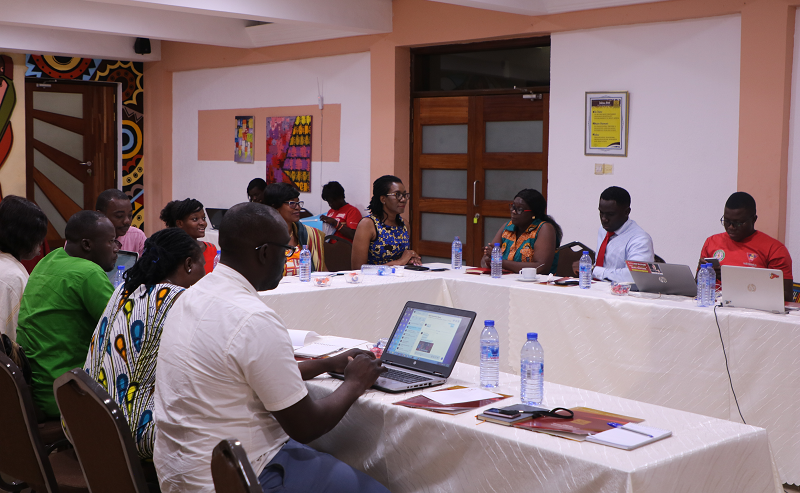
Dr Appiah was speaking Tuesday at a forum in Accra to discuss the Sexual Reproductive Health Rights (SRHR) issues that came up during the recently held Contraceptive Prevalence Data (CPD) session 51 in New York.
The Accra forum which was organised by the Planned Parenthood Association of Ghana (PPAG), an NGO, was intended to help influence advocacy work of Civil Society Organisations (CSOs) to contribute to the needed change in the SRHR sector.
The participants at the forum
Dr Appiah said elsewhere, countries are making gains from their populations due to the conscious efforts they made to manage their populations in relation to their resources.
According to her, we cannot make any meaningful progress as a nation without factoring in the subject of population, stressing that population has direct consequences on every policy of a country.
Dr Appaiah was of the view that many people vote out governments for new ones because they want their lives to improve, explaining that there cannot be any better lives or improved standards of living if the country’s growing population is left unattended to.
The Executive Director of PPAG, Abena Acheampong expressed concern that the country risks many challenges ahead if the current population growth rate is not tackled.
She was of the opinion that the decision by the government to introduce the double track system for Senior High School (SHS) students is partly due to the unplanned population of the country.
Madam Acheampong said a huge population does not guarantee quality life and that those advocating for population growth should rethink their position.
“People are moving from one place to another because the conditions there is not good. And then they come in here and it is no better,” she said, adding “We need to invest in the quality of life rather than expanding.”
Executive Director of PPAG, Abena Acheampong
She said it would be of no essence if the country’s population continued to grow but has no benefits to its development.
“What is the essence of having more people who don’t have any capacity to purchase anything? What economic value do they have?” Madam Acheampong quizzed, adding “the more I think about population, the more scared I become.”
She, therefore, called for a unified front, particularly by CSOs to advocate issues on SRHR, reiterating that it is only through unity that CSOs can make any impact on the lives of the ordinary people in society.
She also urged the participants to continue educating people about the effects of unmanaged populations on the lives of all.
Source: Graphic.com.gh