
Public Agenda NewsPaperPublic Agenda NewsPaper
  • General News
  • Politics
  • Business
  • Health
  • Development Agenda
  • World News
  • Features & Opinions
  • Election watch
  • Editorial
Font ResizerAa
Public Agenda NewsPaperPublic Agenda NewsPaper
Font ResizerAa
  • General News
  • Politics
  • Business
  • Health
  • Development Agenda
  • World News
  • Features & Opinions
  • Election watch
  • Editorial
Search
  • General News
  • Politics
  • Business
  • Health
  • Development Agenda
  • World News
  • Features & Opinions
  • Election watch
  • Editorial
Follow US
Breaking NewsDevelopment Agendatop stories

It could take over 100 years for Ghana and other African countries to become ‘developed’ – Report

Suleman
Last updated: November 25, 2024 10:52 am
Suleman
Share
3 Min Read
SHARE

The latest African Economic Outlook released by the African Development Bank Group (AfDB) has detected what it describes as desynchronization between economic growth performance and sustainable development which suggests that Africa’s current development model is not fit for purpose.

According to the document,  The  Existing  Development  Model, which relies heavily on resource extraction without value addition,  urgently requires a complete overhaul if the continent is to catch up with other regions. 

“The urgency is such that,  under a business-as-usual scenario, it could take today African countries more than a century on average (108 years, for a median of  86  years)  to transition to a high-income status,” the report noted.

More Read

NPA scraps fuel and LPG discounts effective March 16
Oil prices surge, Asian stocks fall over Iran conflict
Ghana has over 5 weeks of fuel stock despite Middle East tensions – NPA
Stabilised economy must benefit ordinary Ghanaians – Vanderpuye
PURC summons ECG over rapid depletion of prepaid units

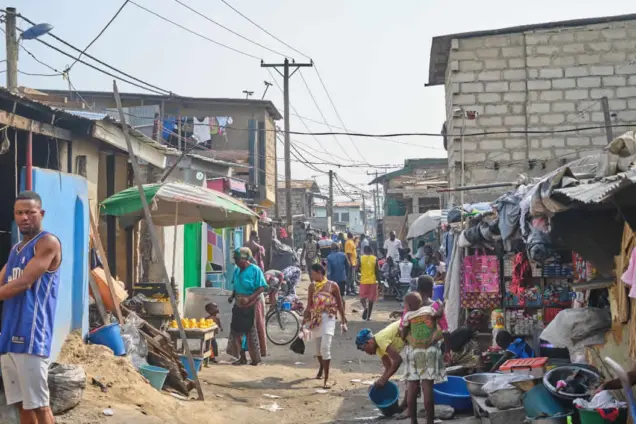
Africa remains the second-most economically unequal region in the world,  after  Latin  America and the  Caribbean.

Over 600 million people on the continent currently have no access to electricity and more than 600,000  die annually from indoor air pollution associated with the use of biomass (charcoal) for cooking and at current growth trends, close to 9 out of 10 of the world’s extremely poor people will be in Africa by 2030.

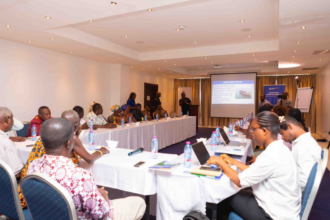
In Gaborone-Botswana, the United Nations Development Programme in Partnership with the UN Economic Commission for Africa (UNECA) and the African Development Bank AfDB is hosting the 2024 African Economic Conference which is reflecting on the theme: “Securing Africa’s Economic Future Amidst Rising Uncertainty.”

While delivering his address at the opening ceremony of the event, Vice President of the African Development Bank, Prof Kevin Chika Urama recommended that “Addressing these recurrent uncertainties requires a multifaceted approach.”

He started by first calling for a fundamental rethinking of the underpinning models of global governance, economic development policy, and new innovations in economic diplomacy and multilateralism.

He also argues that this must be done together with home-grown solutions embedded in local realities. Countries need to realise now more than ever, that national development must not be outsourced.

Development is a do-it-yourself business while adding that Africa’s prevalent predicaments demand effective collaboration and equal partnerships among development institutions, countries and national governments, the private sector and citizens.

To be sustainable, Professor Urama emphasized that “the development process must be inclusive – proactively harnessing all forms of capital, especially human and natural capital, with a laser focus on beneficiation and value addition.”

Organizers of this year’s African economic conference remain hopeful that given the opportunities provided by the forum to review the continent’s experiences and strategies a more resilient development pathway will be crafted for Africa, going forward.

Source: Myjoyonline

Share This Article
Facebook Whatsapp Whatsapp Email Copy Link Print

Latest News

‘I’m a cocoa farmer too’ — Mahama speaks on price cuts and farmer pain amid crises
February 17, 2026
RJN–Ghana Convenes to Strengthen Natural Resource Governance,Validate GESI–ABFA Report
February 17, 2026
Fuel prices edge up after NPA sets new price floors
February 16, 2026
President Mahama rallies his fellow world leaders to support Accra Reset
February 16, 2026
Cocoa sector reforms will protect farmers – Ato Forson
February 13, 2026
BoG Governor Reaffirms Commitment to Prevent Excessive Volatility in the Ced
February 10, 2026
Nigeria Just Raised the Bar for West African Fintech
February 7, 2026

You Might Also Like

Breaking NewsHealthtop stories

13 new Mpox cases confirmed; total reaches 993

February 3, 2026
Breaking NewsGeneral Newstop stories

Ghana suspends citizenship process for people of African descent

February 3, 2026
Breaking NewsGeneral Newstop stories

IGP reshuffles top Police Command

February 3, 2026
Breaking NewsBusinesstop stories

Raw commodity exports undermining Africa’s growth – Mahama

January 28, 2026

About Us

Public Agenda is fou­nded and owned by Pu­blic Agenda Communic­ations.

Public Agenda was founded as a public interest Me­dia entity. Its Visi­on is to contribute to building a well-i­nformed society where accurate informati­on dissemination is the cornerstone of a democratic, just and equitable society.

Its mission is to inform, guide and bui­ld responsible citiz­enship and accountab­le decision making and strive for excell­ence in the media in­dustry. Public Agenda Communications is managed by a Board of Directors.

Welcome Back!

Sign in to your account

Username or Email Address
Password

Lost your password?