

Genuine, inclusive, free and fair elections are an indispensable component of democratic governance, rule of law and respect for human rights alike.
While it is true that West African States have achieved great strides of progress in the last decades, challenges still remain and cases of human rights violations leading to violence and potentially destabilizing tensions make the headlines on a regular basis.
Furthermore, entrenched discrimination based on gender or origin, social marginalization of numerous minority groups and economic inequality are major obstacles that lie in the way full respect for human rights in the context of elections.
More Read

In this context, the United Nations Human Rights Office for West Africa (OHCHR WARO) is engaged to fulfil its mission in promoting and protecting human rights in the context of elections across the 15 States of West Africa.
In close partnership with governments, State institutions, independent institutions in charge of organizing elections and protecting human rights, supra national organizations and civil society actors, WARO has been endeavour-ing to promote and protect human rights in elections since its opening in 2008. Throughout its engagement in the field, the OHCHR has acquired valuable experience and knowledge on human rights engagement in the context of elections stemming from its own practice and that of its partners many on the ground.
This Booklet on “Elections in West Africa: Best Practices and Lessons Learned” presents in a succinct form the lessons drawn from this invaluable experience as well as the best practices of WARO and its partners in terms of awareness raising, technical assistance, early warning and capacity building of relevant actors for the protection of human rights in the context of elections. The booklet aims at making this precious experience available to the reader in order to allow her/him to draw inspiration from other experiences and apply its conclusions and recommendations to another context.
Among the best practices contained in this Booklet, there is the organizations of a Women’s Platform uniting dozens of women’s associations for peaceful elections in Senegal, the training and deployment of over 100 human rights monitors across the regions of Guinea, capacity building and awareness raising work with the security and law enforcement personnel in Togo, as well as on site missions in Burkina Faso. Among the lessons drawn from its experience,
WARO highlights the crucial importance of mobilization by civil society, the potential of advocacy and mediation with institutions and governments as a means of preventing escalation, as well as capacity building and awareness raising of all relevant actors in order to bridge the knowledge gap and prevent violations.
There are many challenges that lie in the way of full compliance with human rights standards in the context of elections, including the shrinking democratic space, excessive use of force, violence and entrenched discrimination leading limited representation of minorities in institutions and major political organizations. This booklet elaborates on the best practices and lessons learned, and elaborate concrete recommendations that can be used to ensure that human rights are fully respected, protected and fulfilled in the context of elections.
Source: United Nations Human Rights Office for West Africa (OHCHR WARO)
ECOWAS team concerned about elections in Liberia
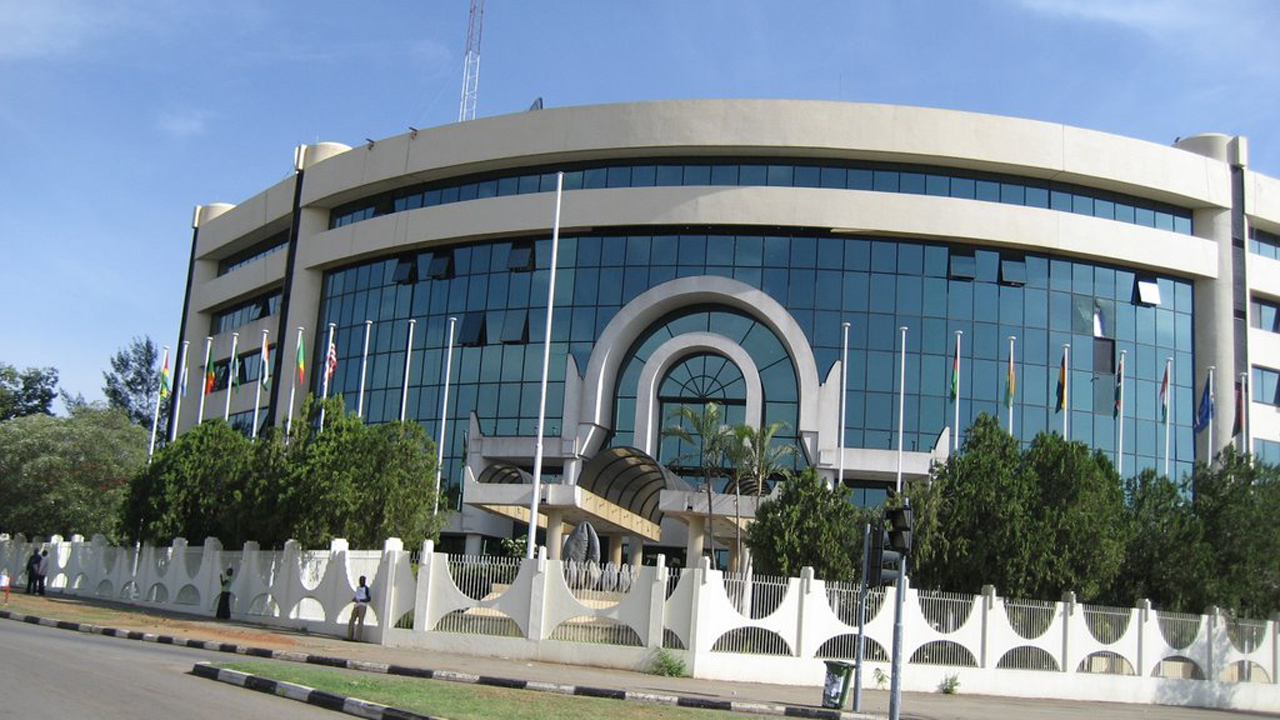
A joint ECOWAS delegation comprising the ECOWAS Network of Electoral Commission (ECONEC) and the ECOWAS Fact-finding Team has raised concerns regarding hate messages being spread by some media institutions and on social media ahead of Liberia’s presidential and representatives’ elections.
But President Ellen Johnson – Sirleaf has told the delegation in Monrovia Wednesday, 19 July that government is determined to manage such situation without infringing on the right to free speech.
“We must ensure that peace reigns before, during and after the elections because the 2017 elections constitute Liberia’s defining moment, which will test whether the country can move forward with political maturity or retrogress,” Mrs. Sirleaf said during a meeting with the ECOWAS delegation.
The joint delegation comprising ECONEC and an ECOWAS Fact-finding Team was led by Professor Mahmood Yakubu, President of ECONEC and Chairperson of the Independent National Election Commission of Nigeria.
Mrs. Sirleaf has assured the ECOWAS delegation that a lot of progress has been made towards the successful holding of the 2017 general and presidential elections and those outstanding challenges are being addressed both by the Government of Liberia and its international partners.
She however says logistical support in particular remains a priority of the government and partners of the country. On the Code of Conduct, President Sirleaf assured the delegation that the matter is being resolved through the Supreme Court of Liberia and expressed confidence that the best legal solution will be found through the court process.
In welcoming the ECOWAS delegation, President Sirleaf thanked them for the visit to Liberia at a very crucial period and acknowledged the important contributions ECOWAS has made in Liberia including the intervention of ECOMOG during the civil crisis. She committed her administration to the holding of free, fair, transparent and credible elections in Liberia.
Speaking earlier, the President of ECONEC, Prof. Mahmood Yakubu provided updates on their mission to Liberia. He informed President Sirleaf that his delegation has held talks with the National Elections Commission (NEC), the diplomatic community, Governance Commission, United Nations Mission in Liberia, the Chief Justice and Associate Justices of the Supreme Court, the leaderships of both Houses of the National Legislature, Inspector General of Police and partner organizations, among others.
Prof. Yakubu points out that the primary goal of ECONEC is to ensure the holding of free, fair, transparent and credible elections within the ECOWAS region and consolidate the democratization process.
He congratulates President Sirleaf for her overall leadership in Liberia, the ECOWAS region and particularly for her role in resolving the political crisis in The Gambia Prof. Yakubu commits to the return of ECONEC to Liberia in October to monitor the General and Presidential Elections, and tells President Sirleaf that a high-level delegation from ECOWAS led by the President of the ECOWAS Commission will visit Liberia soon.