
Public Agenda NewsPaperPublic Agenda NewsPaper
  • General News
  • Politics
  • Business
  • Health
  • Development Agenda
  • World News
  • Features & Opinions
  • Election watch
  • Editorial
Font ResizerAa
Public Agenda NewsPaperPublic Agenda NewsPaper
Font ResizerAa
  • General News
  • Politics
  • Business
  • Health
  • Development Agenda
  • World News
  • Features & Opinions
  • Election watch
  • Editorial
Search
  • General News
  • Politics
  • Business
  • Health
  • Development Agenda
  • World News
  • Features & Opinions
  • Election watch
  • Editorial
Follow US
Breaking NewsGeneral News

Let’s abandon colonial languages- Justice Crabbe advises

Latifa Carlos
Last updated: February 6, 2018 2:35 pm
Latifa Carlos
Share
3 Min Read
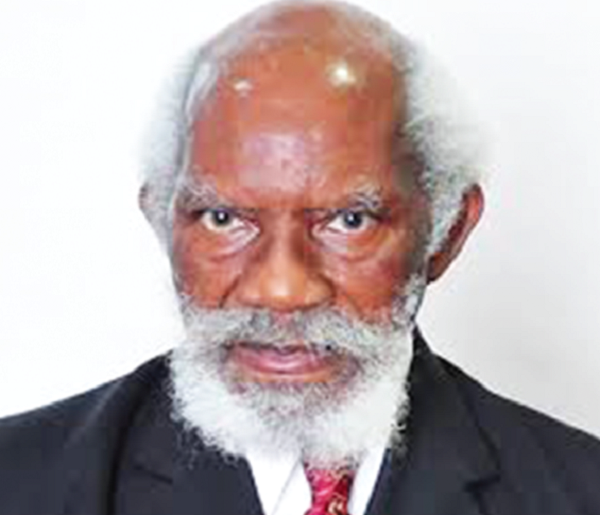
Justice V.C.R.A.C. Crabbe
SHARE

Former Supreme Court Judge, Justice V.C.R.A.C. Crabbe has advised the general public to adopt as the local language for both official and non-official purposes instead of English which happens to be the colonial language.

Justice Crabbe speaking on TV3 recently explained that “Ghanaians should not be proud because they can speak English, but rather be proud of being able to project and preserve our local languages for our present and future generations to come.”

He elaborated that, the act should begin from our parliament where laws are made; members should begin to use the local dialect to debate in the House. They should agree to use one local language, by so doing, before a person will contest for a parliamentary seat he/she should be able to speak the very language accepted by the House.

More Read
Food prices in Ghana remain largely stable – AGRA report
Mahama convenes high-level meeting to strengthen border security and narcotics control
Minority demands action on unemployment among graduates with disabilities
Mental Health Organisations Seek Improved Social Protection for Vulnerable Women and Girls
GOLDBOD!

In Tanzania for instance, their parliamentarians speak Swahili on the floor of parliament, but here in Ghana, parliamentarians have made English the formal language to use in the House, therefore compelling every member to speak the colonial language. This means that if a person is not able to speak English, he or she cannot contribute to discussions and debates on the floor parliament.

The former Supreme Court Judge suggested that the Ghana Education Service (GES) should enforce all schools in the country, both public and private to teach the pupils with the local languages irrespective of where they find themselves.

According to him, the nation must enact a law to compel officials from the highest office of the land which is the Presidency to the lowest, to use local dialect for formal engagements.

But, the Youth Chief of Ahwerease – Darmang near Nsawam in the Eastern Region,Sarkin   Samari,  Mohammed Suleman, disagreed with Justice crabbe.Mr Suleman Argued that Ghanaians have gone  too  far  with what Justice Crabbe  described  as colonial language and  does not think  there will be any turning back. He said, abandoning the colonial or English Language and adopting   the local languages for official engagements will mean going back to begin from the scratch and possibly amending the constitution of the republic of Ghana.

He advised that parents should rather be encouraged to speak the local languages to their children regularly so as to ensure they don’t forget their roots. He indicated that there  are instances  where  parents who  have  lived abroad  for a  long time have  been able  to teach their  children  the  local  languages and  they are able  to speak fluently, therefore  there  is  the  need  to encourage  the parents  to rather up  their  game.


By:Diana Nartey

Share This Article
Facebook Whatsapp Whatsapp Email Copy Link Print

Recent Posts

  • Food prices in Ghana remain largely stable – AGRA report
  • Mahama convenes high-level meeting to strengthen border security and narcotics control
  • Minority demands action on unemployment among graduates with disabilities
  • Mental Health Organisations Seek Improved Social Protection for Vulnerable Women and Girls
  • GOLDBOD!
  • Mental Health Groups Demand Criminal Probe into Alleged Sexual Assault of 14-Year-Old at Bolga Girls SHS
  • Mental Health Authority to shut Kumasi spiritual centre housing 2,000 mentally ill persons
  • Karpowership Ghana trains fisherfolk on fire safety, hygiene and financial management
  • Unforced Error! Contradictions of the Government’s PCI Decision
  • 14 clandestine miners killed in disused South Africa mine
  • NAIMOS launches major operation to clear illegal mining along Birim River
  • IMF urges Ghana to sustain quarterly electricity tariff adjustments‎
  • Oil prices fall on hopes Strait of Hormuz could reopen
  • Bekwai residents give Chinese quarry firm one-week ultimatum over blasting, environmental concerns
  • Veteran Nigerian Environmental Journalist Tunde Akingbade Dies at 67
  • AWSP Welcomes Government Decision to Restore Achimota Forest Reserve
  • Finance Minister presents mid-year budget review today
  • ECOWAS reaffirms plans to launch single currency in 2027

You Might Also Like

Breaking NewsHealthtop storiesUncategorized

Mental Health Groups Demand Criminal Probe into Alleged Sexual Assault of 14-Year-Old at Bolga Girls SHS

August 24, 2026
Breaking NewsHealthtop stories

Mental Health Authority to shut Kumasi spiritual centre housing 2,000 mentally ill persons

August 20, 2026
Breaking NewsGeneral Newstop stories

Karpowership Ghana trains fisherfolk on fire safety, hygiene and financial management

August 12, 2026
Breaking NewsFeatures & Opinionstop stories

Unforced Error! Contradictions of the Government’s PCI Decision

August 13, 2026

About Us

Public Agenda is fou­nded and owned by Pu­blic Agenda Communic­ations.

Public Agenda was founded as a public interest Me­dia entity. Its Visi­on is to contribute to building a well-i­nformed society where accurate informati­on dissemination is the cornerstone of a democratic, just and equitable society.

Its mission is to inform, guide and bui­ld responsible citiz­enship and accountab­le decision making and strive for excell­ence in the media in­dustry. Public Agenda Communications is managed by a Board of Directors.

  • Contact us
  • Advertise with us
Welcome Back!

Sign in to your account

Username or Email Address
Password

Lost your password?