

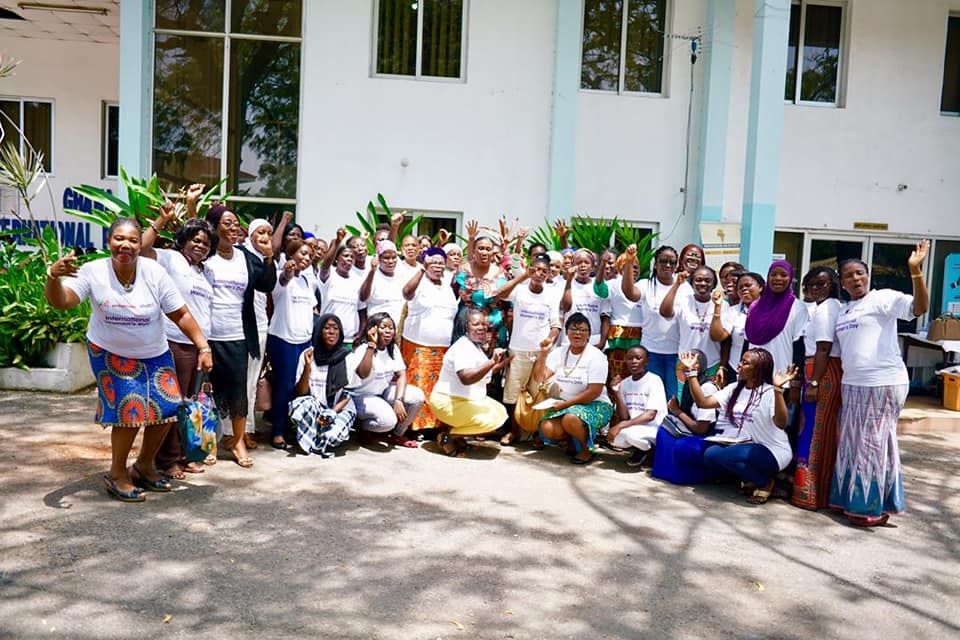
International Women’s Day (IWD) was commemorated on Friday with a stakeholder consultation meeting in Accra on the theme: ‘Think Equal, Build Smart and Innovate for Change.’’
Every year, women are celebrated on March 8 to bring to the fore their social, economic, cultural and political achievement.
This year’s theme focused on innovative ways in which gender advocates can advance gender equality and the empowerment of women, particularly in areas of social protection systems, access to public services and sustainable infrastructure.
More Read

Speaking at a stakeholders meeting organised in Accra by Abantu for Development collaboration with ActionAid, Mrs Sheila Menka-Premo, a lawyer and a gender advocate said the day calls for women and men around the world to recognise issues that women face across the spectrum.
Mrs Menka-Premo, said the theme acknowledged the need for equal participation of women in the local, national and global decision making processes by using innovation and technology to reduce the burden of unpaid care work on women and girls. This, she said, will in turn increase women’s economic power as well as access to public services and sustainable infrastructure.
In Ghana, current trend indicates that, unpaid care work limits the time that women put into other income- generating activities like childcare, cooking, farming, trade among other things.
Similarly, unpaid care work affect women’s participation and representation in decision making places. Women have little or no time to participate in local or national decision spaces to take up leadership role. This eventually perpetuates the stereotype that men are born leaders she said.
According to her, research had shown that women in rural communities spent more of their times in child-caring, fuel wood collection and fetching of water and emphasised that economic rights of women were being undermined and unrecognized by the burden of unpaid domestic work.
Mrs Sheila Menka-Premo emphasized that parents should train their male and female children equally and shouldn’t make their male children feel more important and think the place of women is the kitchen and taking caring of the family only.
We are still advocating for the passage of the affirmative action bill she added.
‘’Let’s demand for spaces, let’s identify the spaces and let’s be bold to occupy the spaces and give hands up to other women, ’she encouraged.
The achievements of the Sustainable Development Goals (SDGs) requires transformative changes, integrated approaches and innovative solutions, particularly when it comes to advancing gender equality and the empowerment of all women and girls. The target date for the achievement of the SDGs will not be possible if ‘’business as usual ‘’ processes are followed.
There is therefore the need to promote the use of technology and innovative means that can remove structural barriers, such as women’s burden of care as the basis for ensuring that no woman and no girl is left behind as the SDGs demand. This would provide adequate time for paid work as a means of enhancing their economic well-being and their ability to contribute effectively to development.
One key area is innovation and technology which provide unprecedented opportunities for promoting equality. In our quest therefore to ensure that women effectively participate and represent in politics and decision making spaces, as well as enhance their economic power, it is critical that innovative ways and technology is optimized as a means of reducing unpaid care work and providing women with ample time to contribute to our nation’s holistic development. In the case of girls and young women, a reduction in unpaid care work would result in their unlimited and consistent access to education and professional training.
By: Latifa Carlos